
Let Them See You Do the Hard Thing
Jun 01, 2026A few weeks ago I did something I had never done before.
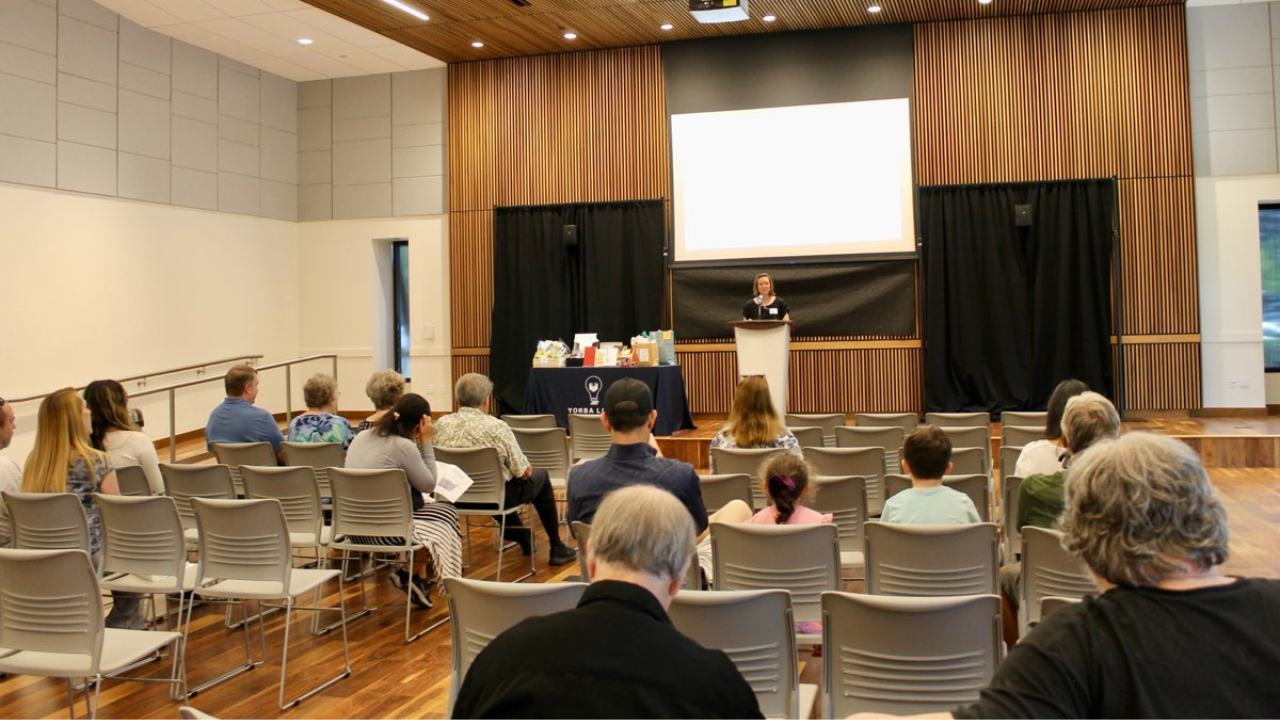
I was selected as one of the authors for a local author festival, and I read an excerpt from The Empowered Athlete out loud in front of a room of people I had never met. It was the first time I had ever read from my own book in public.
My family was there. My kids were in the front row.
My reading included the dedication and the first athlete story in the book, which is one of my own. Both pieces had been on the page for years. I had reread them many times. I had never read either of them out loud with my kids sitting in front of me, looking up at the podium.
I started the dedication. My throat closed. Tears stung my eyes.
I was not sure I would make it through while they watched me try.
I paused. I took a deep breath. And I finished.
Here is what I keep coming back to.
I have spent my career as a mental performance coach talking to young athletes about doing the thing scared. About the difference between feeling ready and being willing. About the moment you step into something that asks more of you than you feel prepared to give, and you do it anyway.
That night was the first time my kids saw me have to do it.
Not coach it. Not teach it. Not say it on a podcast or in a session or on a stage where I was practiced and composed. Actually do it. In real time. While I was visibly nervous. While my voice was shaking on the words I had written for them.
I do not know exactly what they took from it. They are still little. The meaning will reveal itself to them slowly, the way these things do.
But I know what I want them to remember.
The version of mental toughness I want them to grow up understanding is not the version where you never feel scared. It is not the version where the feeling goes away if you work hard enough. It is not the version where confidence shows up before you act.
It is the version where you finish anyway.
That is the entire mental performance frame, distilled to a sentence.
Most of the work I do with athletes traces back to this. We talk about the gap between how an athlete feels and what they are capable of doing in that moment. We talk about how the nervous system protects you by telling you that you are not ready, when often what it really means is that you are about to do something that matters. We talk about how confidence is built on the back of action, not on the front of it.
And then we practice. Over and over. In small moments. In bigger ones. Until acting before the feeling shows up becomes more familiar than waiting for the feeling to arrive.
The kids watching their parents in the audience of an author festival are getting a version of that lesson too, whether anyone names it or not. They are learning what it looks like when an adult they trust does something hard. They are watching to see if the people they love can move through fear or if they avoid it.
That is one of the most underrated forms of teaching there is.
This is the part I want to say clearly to every parent reading this.
You do not have to be perfect for your athlete to learn from you. You do not have to model effortless calm. You do not have to pretend the hard thing is not hard.
In fact, the opposite is true.
The most powerful thing you can do for your athlete is let them see you do hard things while you are scared. Let them see you read the speech with your voice shaking. Let them see you walk into the meeting you have been dreading. Let them see you take the trip alone. Let them see you say yes to the thing that asks more of you than you feel ready for.
They learn more from watching you push through than from anything you say about it afterward.
So this is not a story about reading a book in public.
This is a story about what your kids see, and what they remember, and what they internalize about what it means to be brave.
The work of raising a resilient athlete is not separate from the work of being a person who is willing to do hard things in front of them.
It is the same work.
I am so glad I said yes.
