
Sometimes the Hard Thing Is a Tent
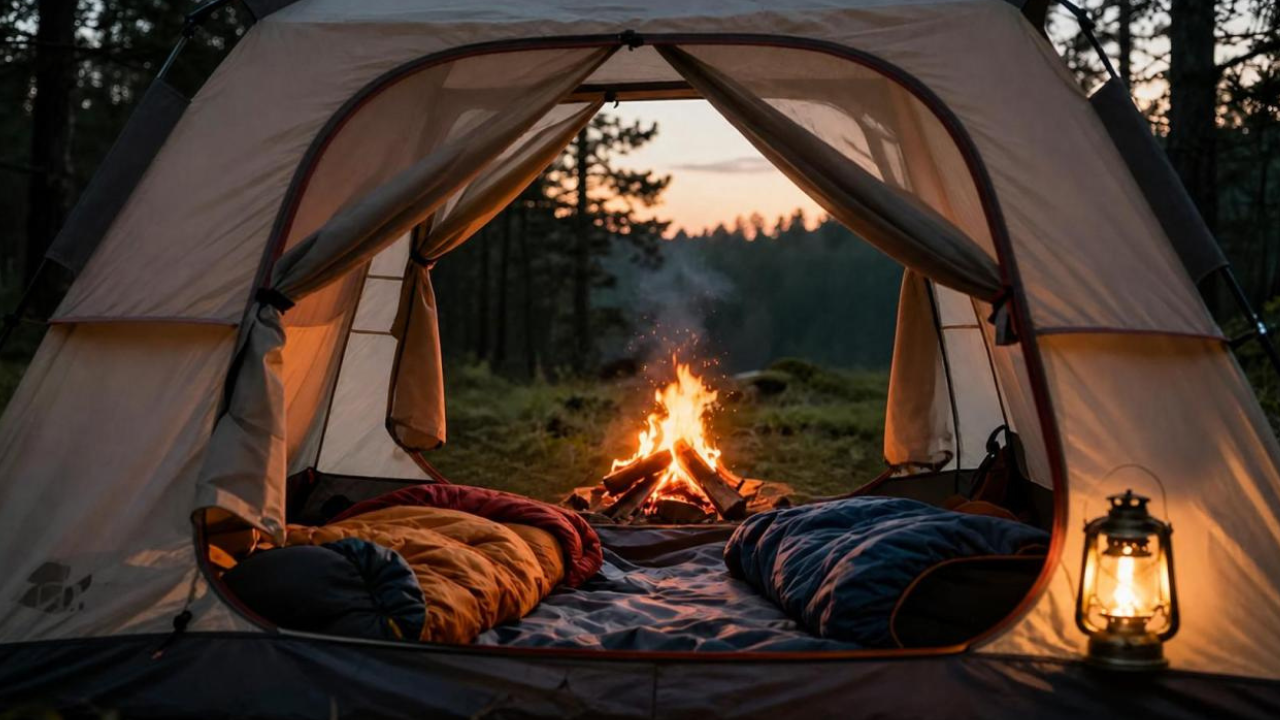
Jun 07, 2026I took my kids camping by myself for the first time recently. I am still feeling pretty proud of myself.
Here is what I want to say about that trip.
I am a goal setter by nature. I treat almost every meaningful thing in my life the same way: figure out what it requires, create a game plan, practice the parts of it I can practice, and then go do it. This trip was no different. We rehearsed in our backyard leading up to our trip. I built the tent. I blew up the air mattress. I turned on the little propane burner to make sure I remembered how. I started a fire to prove to myself I could.
I prepared.
And I still had a running list of what-ifs in my head the entire drive up the mountain.
What if one of them got hurt? (They both did, for the record. And we figured it out!)
What if I forgot something important?
What if the tent did not go up?
What if it rained?
What if I burnt dinner?
What if I could not start the fire?
What if a snake got into our tent?
All of those questions were just masking the real one. The one underneath all of them.
What if I could not handle it on my own?
This is the part I want every athlete and parent to understand, because it took me a long time to learn it for myself.
The voice that tells you you are not good enough, or tries to talk you out of things, is not your enemy. It is also not necessarily telling you the truth.
That voice is defaulted to be negative because it is trying to protect you. It is your nervous system running a worst case scenario in the hope that if it shows you every way the thing could go wrong, you will choose to stay safe. It is doing its job.
The mistake is treating that voice as a directive without analyzing it.
It is not a directive.
It is information.
You can listen to it. You can notice what it is saying. You can even thank it for trying to keep you safe.
And then you can decide what to do with it.
That reframe is one of the most important pieces of mental performance work I teach. Because most athletes who hesitate at the edge of something hard are not lacking ability or motivation. They are taking the voice in their head literally. They are confusing the worst case scenario their brain is running with a verdict on what is actually true.
It is not a verdict. It is just information.
Here’s a sports example I have been helping athletes work through lately: “I haven’t skated in two weeks. I am going to be SO rusty and terrible.” Reframe: “I have been charging my battery for the last two weeks. I am going to come out SO energized and ready to crush it.” See the difference? Feel the difference??
We had an incredible trip.
I built a kickass fire. The kids helped me put up the tent. We hiked. We rode bikes through the pump track. We told ghost stories that were not actually scary. We laughed. They slept great. I lay there smiling to myself, thinking about how easily I could have decided this was too much for me to do alone.
The whole time, I kept thinking about how often I ask athletes to push past the version of themselves who has not done the thing yet. To trust that they can figure it out in real time. To act before they feel ready.
I had been telling them… But I had not been doing it for myself in a while.
This is the part that matters.
The mental work is not something you do once. It is not a milestone you reach and then get to coast on. It is a practice you keep returning to, in new shapes and new places and new contexts, for the rest of your life.
The athletes I respect the most are the ones who keep finding ways to do hard things. Not the same hard thing over and over. New ones. Different ones. Things that ask something of them they have not been asked before.
That is true for adults too.
If you have not done something that scared you a little in a while, that is worth paying attention to. Comfort zones are sneaky. They do not announce themselves. They just slowly shrink until one day you realize you have not asked anything of yourself in longer than you would like to admit.
Sometimes the hard thing is a tryout.
Sometimes it is a tent.
The point is to keep finding the next one.
