
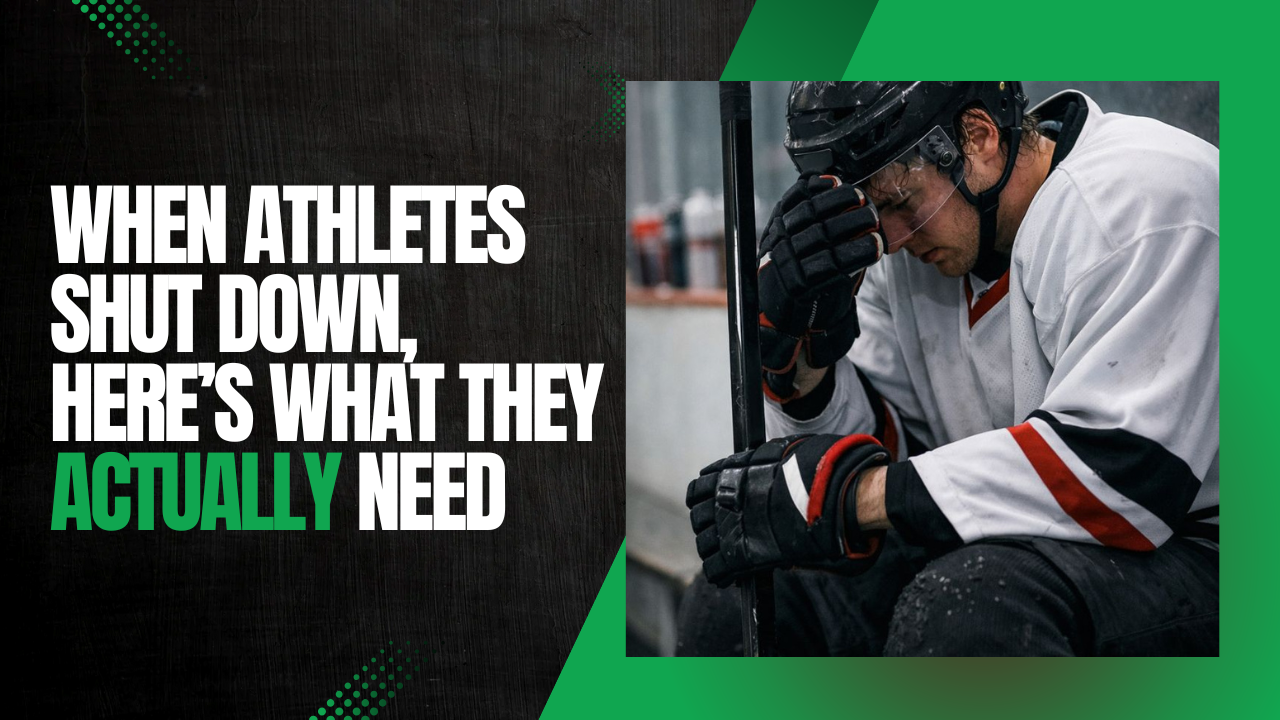
When Athletes Shut Down, Here’s What They Actually Need
Feb 08, 2026It’s one of the most concerning moments for parents and coaches alike.
An athlete goes quiet.
They stop engaging.
They won’t talk.
They shut down.
And the instinct is immediate: What did I do wrong? Or, how do I fix this?
But here’s an important reframe that can change everything:
When athletes shut down, it’s rarely about attitude.
More often, it’s about overload.
What’s Really Happening Beneath the Surface
When an athlete shuts down, it can look like:
- Disinterest
- Defiance
- Lack of motivation
- Poor communication
But what’s usually happening underneath is something very different.
Athletes may be experiencing:
- Emotional overload (disappointment, frustration, embarrassment)
- A communication breakdown (too many voices, mixed messages)
- Too much input, too fast (feedback before they’ve had time to process)
Their nervous system is overwhelmed. And when that happens, the brain’s ability to reflect, respond, and communicate clearly goes offline.
This isn’t stubbornness. It’s stress.
Why “Fixing It” Often Makes Things Worse
When parents sense their athlete pulling away, the natural response is to jump in and help.
Offer advice.
Break down what went wrong.
Provide reassurance.
Try to solve the problem quickly.
While well-intentioned, this often adds more input at the exact moment the athlete needs less.
When stress is high, athletes don’t need fixing.
They need space to regulate.
The Mindset Shift That Changes Everything
Here’s the reframe I encourage parents to practice:
Instead of focusing on solving, focus on stabilizing.
Stabilizing might look like:
- Sitting quietly instead of talking
- Giving them a few minutes (or hours) of space
- Lowering the volume of feedback
- Acknowledging feelings without correcting them
- Waiting to revisit the conversation later
This isn’t avoidance. It’s intentional regulation.
Why the Order Matters
One of the most important principles in communication with athletes is this:
Calm first.
Clarity later.
Trying to access logic, learning, or reflection before emotions have settled rarely works. But once an athlete feels calm and safe, clarity becomes possible again.
Connection opens the door.
Advice works best after that door is open.
A Reassurance for Parents
If your athlete has shut down recently, this is important to hear:
It doesn’t mean you failed.
It doesn’t mean they don’t care.
It doesn’t mean the relationship is broken.
It often means their nervous system needs time to reset.
The patience you show in those moments — the restraint, the empathy, the willingness to wait — is not passive. It’s powerful.
Strong Foundations Are Built Here
Athletes don’t remember every drill or every game.
But they remember how they felt when things were hard.
They remember whether they felt understood or evaluated.
They remember who stayed steady when they couldn’t.
Strong foundations are built in moments of patience, awareness, and empathy.
Even when it doesn’t feel like it, you’re doing important work.
