
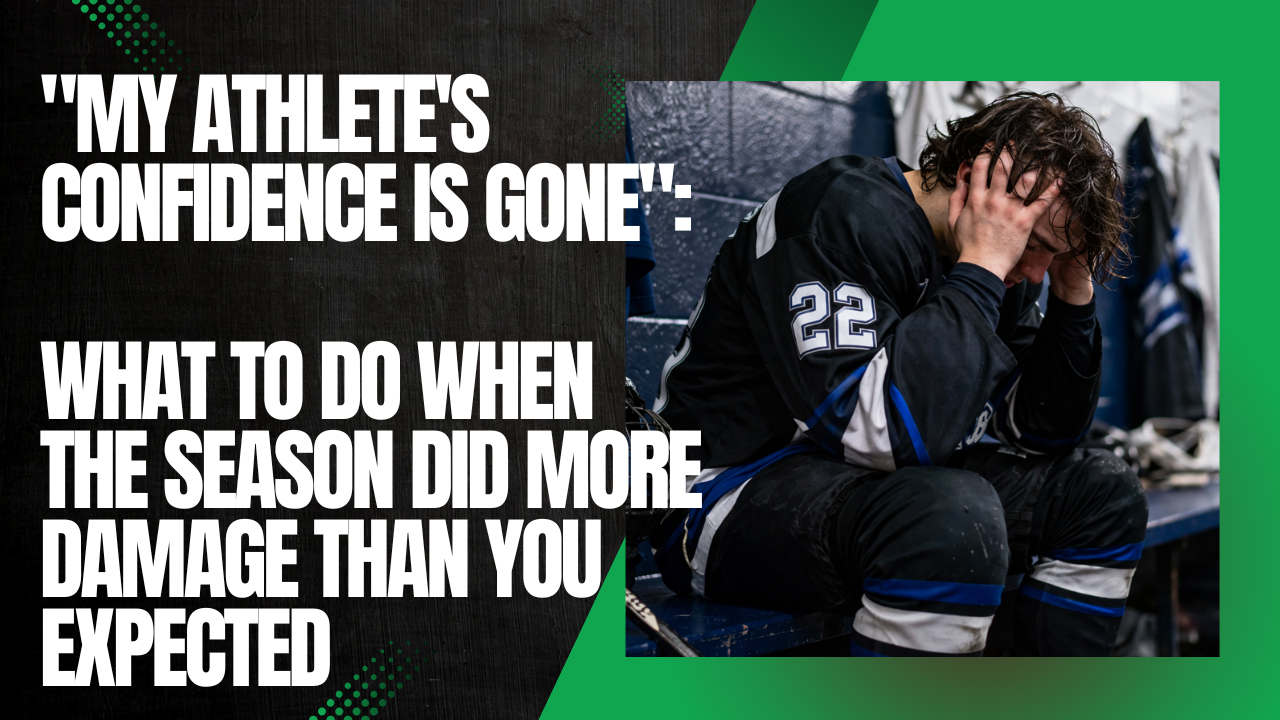
"My Athlete's Confidence Is Gone": What to Do When the Season Did More Damage Than You Expected
May 03, 2026It's the end of the season.
The games are done. The schedule cleared. And you're sitting with something you didn't quite anticipate: your athlete seems different.
Not tired-different. Not just ready-for-a-break different.
Something shifted this season. Their confidence, which used to feel relatively stable, is now fragile. The car rides home are heavier. The way they talk about their sport, if they talk about it at all, has changed. You're watching an athlete who used to love competing start to seem uncertain about whether they want to keep going.
This is more common than most parents know. And it's not a sign that something is permanently broken. It's a sign that your athlete has been coping with more pressure than their mental skills toolkit was equipped to handle.
The good news: the off-season is exactly when this gets addressed.
What Actually Happened
Youth sports pressure has increased significantly in recent years. Earlier specialization, higher financial stakes, coaches whose feedback style leans hard on criticism — these factors combine to put athletes in environments where their identity becomes deeply tied to their performance.
When an athlete's sense of self depends on how they play, a hard season doesn't just hurt their confidence. It damages it.
They start avoiding risk on the ice or field because the cost of mistakes feels too high. They replay errors for days instead of hours. They interpret tough feedback as confirmation of something they fear is true about themselves.
From the outside, it can look like a motivation problem, an attitude shift, or simple burnout.
But underneath, it's almost always the same thing: an athlete whose mental skills haven't kept pace with the pressure they're facing.
The Expensive Band-Aid That Makes Things Worse
Here's what happens next in most families.
The instinct is to fix it with more. More practice. More ice time. More private lessons. More training camps.
I've watched parents spend more on summer training than some people spend on their car payment, then wonder why their athlete is more anxious in September than they were in May.
Because you can't fix a mental problem with physical training.
Actually, sometimes throwing more physical training at a mental problem makes it worse. The athlete gets physically stronger but mentally more fragile. They're in the best shape of their life but carrying more pressure than ever.
The Off-Season Is Not Wasted Time
One of the most common mistakes families make after a hard season is treating the off-season as recovery time and nothing more. Rest matters, but rest alone doesn't close a mental skills gap.
Athletes who come out of the summer without intentional mental training carry the same patterns into the next season. The spiral after mistakes. The identity tied to outcomes. The confidence that cracks under pressure.
What changes that is purposeful work during the window when competition pressure is low enough to actually build something new.
The off-season is when athletes can learn how to talk to themselves after a mistake instead of just surviving the spiral. When they can start separating their identity from their performance so a bad game doesn't define them. When they can build the kind of confidence that doesn't depend on perfect outcomes, the kind that's still there when things get hard.
What About Tryouts and Showcases
There's another kind of urgency parents feel this time of year too.
Tryouts are coming. A showcase or combine is on the calendar. A summer camp that could change things is three months away.
Many of these parents see an athlete who is talented enough to make it but who turns into someone else when the pressure hits. Tight. Overthinking. Not the player they know their kid can be.
The question underneath all of it is the same: will my athlete be mentally ready?
Physical preparation matters. Skills matter. But the athletes who walk into high-pressure evaluation moments with a steady internal state, the ones who can reset after a rough shift instead of spiraling, who trust themselves when the coach is watching, those athletes are doing something mental, not just physical.
Both the rebuild parent and the tryout-prep parent are dealing with the same underlying need: an athlete who has the mental tools to perform when it counts.
And that's when all the money spent on physical training actually pays off, because their mind isn't sabotaging their body.
Where to Start
If you're in either of those situations right now, the Sports Stress Quiz is a useful first step. It helps you understand how your athlete responds to performance pressure and where the mental skills work needs to happen first. It takes less than two minutes and the results give you a clear picture of what's actually going on beneath the surface.
You can take it at ocppt.com/quiz.
And if you want to understand what structured mental skills training actually looks like, what it involves, how it works, and whether it's the right fit for your athlete, I'm hosting a free virtual open house on May 17th. It's a mix of a live mini-lesson and open Q&A, and it's open to any parent or coach who's been wondering if this is something their athlete needs.
For those who show up live, I'll have a gift waiting for you that you can't get anywhere else.
The off-season is the window. It's open right now.
