
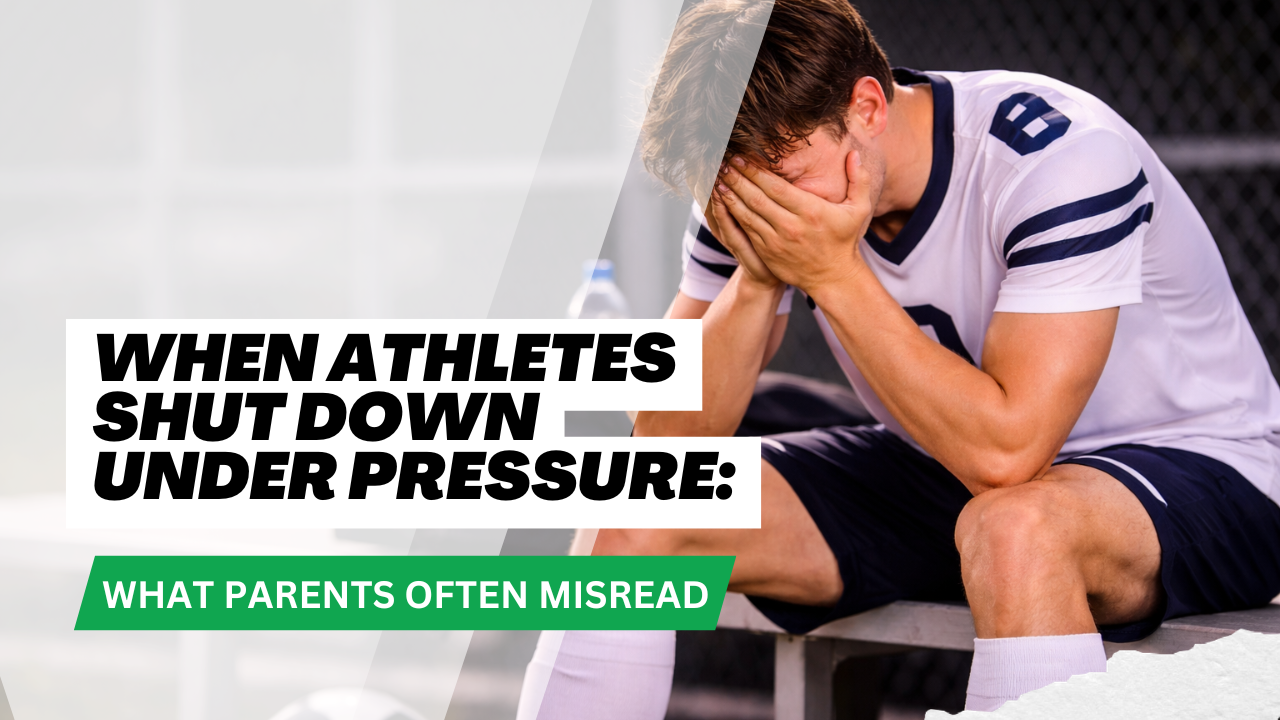
When Athletes Shut Down Under Pressure: What Parents Often Misread
Mar 22, 2026[I created a brand new quiz! See below!]
One of the most common things I see in youth sports is parents misreading what’s actually happening when their athlete is under pressure.
A player suddenly looks different during a game.
They hesitate before making a play.
They stop taking risks they usually take.
They seem distracted, frustrated, or disconnected.
From the outside, it’s easy to assume the issue is confidence.
Sometimes it gets labeled as an attitude problem.
Other times it’s seen as laziness or a lack of effort.
But most of the time, that’s not what’s actually happening.
What you’re seeing is a stress response.
What Happens to Athletes Under Pressure
When athletes feel pressure, their nervous system automatically shifts into coping mode. This is a natural biological response designed to protect them when something feels threatening or overwhelming.
In sports, that “threat” might be:
- A high-stakes game
- Fear of making mistakes
- Pressure from coaches or teammates
- Expectations from parents
- The internal pressure they put on themselves
When that pressure rises, athletes often default to a specific coping pattern.
Some athletes freeze and begin overthinking every decision.
Some become reactive or emotional.
Some start avoiding situations where they might fail.
Others push harder and harder, believing more effort will solve the pressure they feel.
None of these responses mean something is wrong with the athlete.
They are protective patterns.
The Four Common Stress Responses in Sports
Over time, most athletes develop a dominant pattern when they feel pressure.
Some freeze. They become hesitant and overanalyze every move.
Some fight. They become reactive, frustrated, or emotional.
Some flight. They start avoiding situations where they might make mistakes or look bad.
Others push. They respond by working harder and harder, trying to control the pressure through effort.
These responses are incredibly common in youth sports. In fact, many high-performing athletes rely on these patterns to cope with pressure.
The problem is not that the pattern exists.
The problem is when no one understands what’s happening.
Why Misreading Stress Responses Makes Things Worse
When adults misunderstand what they’re seeing, they often respond in ways that unintentionally increase the pressure.
If an athlete freezes, they may hear:
“Just be more confident.”
If an athlete reacts emotionally, they may hear:
“You need to control your attitude.”
If an athlete avoids pressure, they may hear:
“You’re not trying hard enough.”
If an athlete pushes relentlessly, they may be praised for “work ethic” while quietly burning out inside.
None of these responses address the real issue.
The athlete isn’t lacking character.
Their nervous system is trying to cope.
And if we don’t understand the pattern, we often respond in ways that add even more pressure to an already overwhelmed athlete.
What Changes When Parents Understand the Pattern
When parents begin to recognize their athlete’s stress pattern, everything shifts.
Instead of reacting to the behavior on the surface, they can respond to the underlying experience their athlete is having.
Communication becomes easier.
Support becomes more effective.
Pressure becomes easier to navigate.
Most importantly, athletes start to feel understood instead of judged.
And that’s where real growth begins.
When athletes feel emotionally safe, they can start developing the tools that help them perform under pressure instead of simply coping with it.
Helping Parents Identify Their Athlete’s Stress Response
Because this pattern recognition is so important, I created something to help parents better understand how their athlete responds to pressure.
It’s called the Sports Stress Quiz.
The quiz helps parents identify which stress response pattern their athlete most commonly falls into and gives insight into what kind of support will help them move forward.
Once you understand the pattern, you can begin supporting your athlete in ways that build confidence, resilience, and long-term performance.
You can take the Sports Stress Quiz here.
Because when you understand what’s really happening under pressure, you can help your athlete move from simply coping with sport… to truly thriving in it.
