
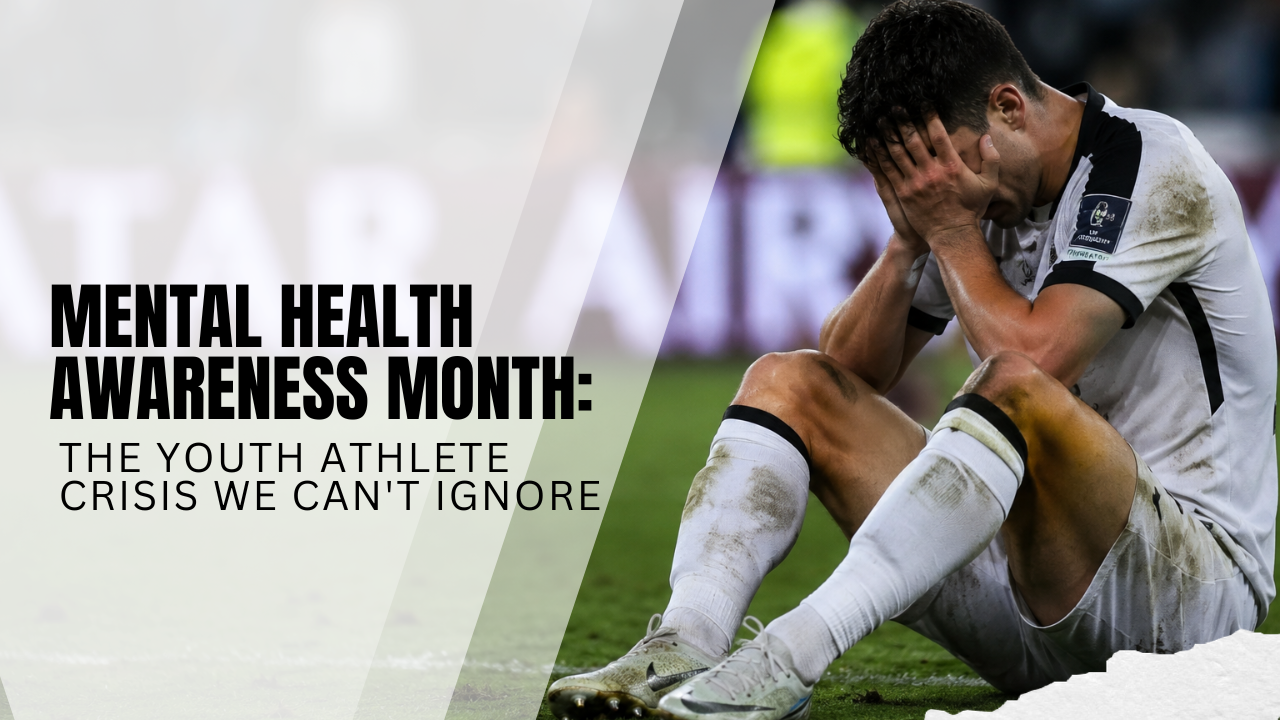
Mental Health Awareness Month: The Youth Athlete Crisis We Can't Ignore
May 10, 2026It's Mental Health Awareness Month, and the numbers around youth athletes should be a wake-up call for every parent, coach, and organization involved in youth sports.
Between the ages of 8 and 14, girls' confidence drops by 30%.
The average age for anxiety onset is 11 years old.
70% of youth athletes quit their sport by age 13 due to overwhelming pressure, stress, early specialization, and overtraining.
35% of elite athletes experience a mental health crisis.
Suicide is now the second leading cause of death among college athletes.
These aren't just statistics. They represent millions of young people whose experience of sport has become a source of stress rather than joy, pressure rather than growth, anxiety rather than confidence.
But here's what gives me hope: these outcomes aren't inevitable.
The Confidence Crisis Starts Early
The statistics tell a troubling story that begins much earlier than most people realize. By age 11, many children are already experiencing their first symptoms of anxiety. During those same critical years — between ages 8 and 14 — girls confidence drops by 30%.. 30%.
This isn't a coincidence. These are the years when sports become more competitive, when performance starts being measured more closely, and when children begin internalizing messages about their worth based on their achievements.
For many young athletes, this is also when sport stops feeling like play and starts feeling like pressure.
The Great Exodus at Age 13
By age 13, 70% of youth athletes have walked away from organized sports entirely. They cite overwhelming pressure, stress, and the loss of enjoyment as primary reasons.
Think about that number. Seven out of every ten young athletes decide that sport, which should be a source of growth, challenge, and joy, isn't worth continuing.
These aren't athletes who lack talent. These aren't families who can't afford to continue. These are young people whose experience of sport has become so stressful that quitting feels like the healthier option.
What Happens to Those Who Stay
The athletes who continue into elite levels don't escape these struggles, they often intensify them. Of the 30% that keep playing past the age of 13, 91% of them experience depression in high school; and 35% of elite athletes experience a mental health crisis at some point in their careers.
And at the college level, the statistics become even more sobering. Suicide is now the second leading cause of death among college athletes, with rates doubling over the past 20 years.
These are athletes who "made it." They’re part of the [less than] 2% that earned scholarships, reached the levels that millions of young athletes dream about. Yet they're struggling at rates that should alarm everyone involved in youth sports.
What Creates These Statistics
Youth sports culture has changed dramatically in recent decades. Earlier specialization, year-round competition, increased financial investment, and intensified pressure around college recruiting have created environments where many athletes' mental health suffers.
When an athlete's identity becomes completely tied to their performance, every mistake feels personal. When their self-worth depends on outcomes they can't fully control, anxiety becomes a natural response. When the pressure to be perfect outweighs the permission to be human, mental health struggles follow.
The athletes showing up in these concerning statistics aren't weak. They're responding normally to abnormal levels of pressure.
What Protects Athletes From These Outcomes
The athletes who don't show up in these statistics, the ones who maintain their mental health while pursuing competitive sport, aren't necessarily more talented or naturally resilient.
They have tools.
They know how to manage pressure before it becomes overwhelming. They can reset after mistakes without spiraling. They understand how to protect their identity when performance doesn't go as planned. They have frameworks for handling the ups and downs that come with competition.
These aren't innate traits. They're learned skills.
Mental skills training teaches athletes emotional regulation, perspective-taking, and healthy pressure management. It helps them separate their worth as a person from their performance as an athlete. It gives them tools to navigate stress in ways that support rather than undermine their mental health.
When Prevention Matters Most
The off-season is the optimal time for building these protective skills.
During competition season, athletes are often in survival mode — just trying to get through practices, games, and the emotional intensity that comes with them. There's little space for learning new approaches or developing different habits.
But during the off-season, when competition pressure is lower, athletes can actually learn and practice mental skills that will serve them when pressure returns.
This isn't about fixing what's broken. It's about building what's protective.
A Different Path Forward
This week, I've been watching athletes in the program have realizations that will change the trajectory of their athletic experience.
Many of them have been carrying the weight of comments from coaches — that they weren't "mentally tough enough" or needed to "be stronger." They internalized these as truth and spent months trying to prove them wrong by training harder, adding more pressure, doing more of everything that was actually making their mental state worse.
This week, a common realization I keep hearing is: "I think I've been trying to fix the wrong thing."
These moments represent exactly what mental skills training creates — the ability to recognize patterns that aren't serving you and develop different approaches.
They’re not broken. They never were. They needed frameworks for understanding how to build real mental strength rather than just enduring mental strain.
Moving Beyond Statistics
Your athlete doesn't have to become part of these concerning statistics.
Mental health in youth sports isn't just about identifying problems after they develop. It's about building protective factors before they're needed.
Athletes can learn to love competition without being controlled by it. They can pursue excellence without sacrificing their well-being. They can be competitive and mentally healthy at the same time.
But it requires intentional support. It requires tools. It requires environments that prioritize the whole person, not just the athlete.
That's the work we need to be doing. Not just for performance — for protection.
