
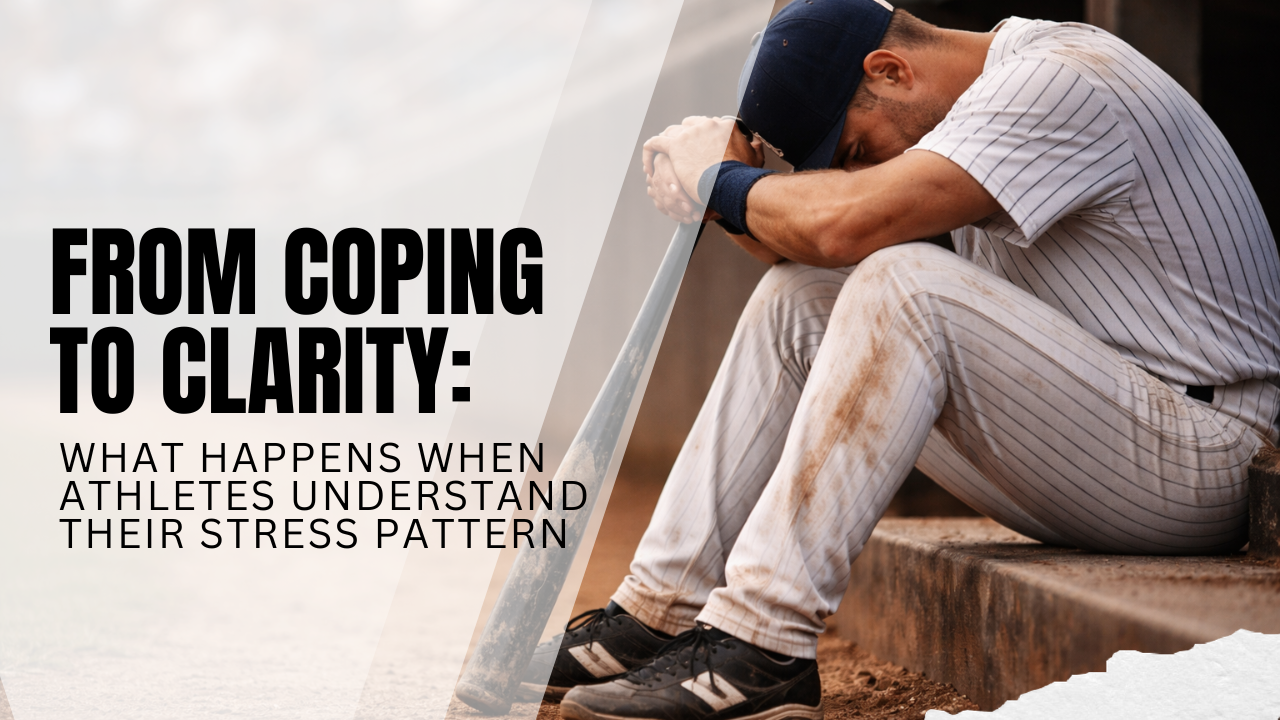
What Happens When Athletes Understand Their Stress Pattern
Mar 29, 2026In youth sports, we tend to focus on what we can see. Speed. Skill. Effort. Results.
But underneath those visible metrics, every athlete is carrying an internal experience that rarely gets talked about. How they process pressure. How they recover from mistakes. How they talk to themselves when things go wrong. Whether their confidence holds steady or collapses depending on the outcome of a single game.
Over the past month, we have been exploring what is really happening beneath the surface. We have discussed the rising pressure athletes face, the difference between thriving and surviving, and the four common stress responses athletes default to when the stakes feel high.
Those responses, freeze, fight, flight, and push, are not weaknesses. They are the nervous system’s way of protecting an athlete when something feels threatening or overwhelming.
But there is a difference between coping with pressure and optimizing through it.
What Coping Looks Like
Coping is what allows athletes to survive pressure in the moment. It keeps them functional when emotions spike and helps them get through a tough game, a bad shift, or a difficult season.
But coping has a ceiling. When athletes are stuck in coping mode, sport starts to feel heavy. Instead of competing with freedom, they compete with tension. Instead of bouncing back from mistakes, they carry them. Instead of enjoying the challenge, they brace for whatever might go wrong next.
Coping is not a failure. It is a starting point. But when it becomes the permanent state, athletes miss the chance to develop the skills that allow them to perform with genuine confidence, clarity, and resilience.
What Optimization Looks Like
Optimization is what happens when athletes move beyond survival and begin performing with intention. Athletes who are optimizing recover quickly from mistakes. They compete with freedom instead of fear. Their confidence is rooted in self-understanding rather than outcomes. They can handle pressure without being controlled by it.
The shift from coping to optimizing does not require a personality change. It requires awareness of the pattern, practical tools to interrupt it, and a supportive environment that reinforces new habits.
The Bridge: Clarity
The bridge between coping and optimizing is always the same: clarity. When an athlete can name their stress response, the pattern stops being invisible. It becomes something they can observe, understand, and redirect.
When parents recognize the pattern, the conversation changes. Instead of adding more pressure or misreading behavior as attitude, they can respond in ways that actually support growth.
This is exactly why I created the Sports Stress Quiz. It helps parents identify which stress response their athlete most commonly falls into and understand what kind of support helps them move forward.
Why the Off-Season Matters
During the competitive season, athletes are managing games, travel, school, and the constant pressure of performance. There is limited bandwidth for deep skill-building.
The off-season removes that pressure. It creates space for athletes to develop the mental skills that make the biggest difference when competition resumes: emotional regulation, confidence that is not tied to results, healthy self-talk, identity development, and the ability to recover from setbacks with resilience.
Athletes who use the off-season intentionally come back stronger. Not just physically, but mentally. They return to competition with a steadier foundation, more self-awareness, and tools they can access when pressure rises.
What Comes Next
This month was about understanding. Next month, we are moving into action.
I will be sharing more about the off-season window, why it matters, and how families can use it to build the mental performance foundation that changes everything. Last summer, I ran a program specifically designed for this window. The results were powerful. And it is returning this year.
If you have not taken the Sports Stress Quiz yet, start there. It takes less than two minutes and gives you a clear picture of how your athlete responds to pressure.
Because once you understand the pattern, you can begin supporting the shift from coping to clarity, and from clarity to real, lasting confidence.
